

Free Try-Out Edition
The Seven Sins
for Amada Dorta Cerpa, born on 26 January 1962

Introduction
Order nowThis is a short extract from Liz Greene's "The Seven Sins". The complete horoscope for Amada Dorta Cerpa contains about 24'500 words, or 46 pages in PDF format.
This horoscope analysis - using the insights of astrology and psychology combined with the tools of advanced computer technology - offers you an astrological portrait which is uniquely and individually focussed and which aims at providing greater self-knowledge.
Is the twenty-first century really a time when we can talk about sin? Is sin necessarily something that reflects a religious world-view, or might it be a fundamental psychological dynamic that has profound meaning in terms of our compulsions, our struggles with our own tendencies toward destructiveness, and our efforts to contribute something creative to life?
The concept of the Seven Cardinal Sins is a very ancient one, and long predates what we now think of in Western cultures as a medieval and grossly outdated list of offences against the dictates of religious orthodoxy. If we are to understand within a psychological framework what it might mean to sin, and what kind of profoundly complex and potentially transformative themes underpin older and often highly misleading interpretations, we will need to look more deeply at each of the Cardinal Sins and its expressions in individual character and life.
The challenges of the Seven Sins don’t disappear with age, nor lessen with experience. What can change at any time in life, with effort and inner exploration, is our consciousness, and our capacity to recognise the subtle ways in which our inner compulsions can impel us to express the very best as well as the very worst within us.
The First Sin: Envy
The first chapter is about envy and the associated struggles. Liz Greene shows how you can find an inner authenticity that provides deep self-esteem throughout life. In the full version, this chapter contains ten topics.
The Second Sin: Gluttony
The second chapter is about gluttony and how to discover a powerful inner aspiration that opens new dimensions of awareness.
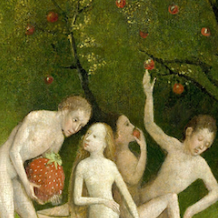
The second Cardinal Sin is Gluttony. In Latin, it was known as 'Gula', a word that also means 'throat' - an allusion to a boundless greed for food and drink. Like Envy, Gluttony can be destructive, from its effects on physical health to its effects on the planet through overconsumption and waste.
But Gluttony isn't only about a shameless appetite for more food, money, or possessions. Another way of understanding Gluttony is that it reflects a compulsive need to be more than what we are. We might also call Gluttony Dissatisfaction, because it reflects something within us that remains perennially discontented with mundane reality. If we can maintain moral integrity in the face of that dissatisfaction, we might discover a powerfully creative drive that we could also call Aspiration.
[..] But your urgent
need to feel part of a greater unity is also your particular expression of Gluttony, as you tend
to be so addicted to 'We' that you may fail to recognise the importance of 'I': your individual
feelings and needs, and those of other individuals. You are inclined toward the general rather
than the particular, which in itself is a positive quality; but in your generalisation of human
needs, you may overlook the fact that no two individuals are ever the same. Your sociability and
courtesy give you magnetism and the capacity to influence others' thinking, and you can strike up
a conversation
Stealing the limelight
Your big personality demands lots of room to expand and express itself in every situation in which
you find yourself. Whether obvious or subtle, you are a born performer, and you crave the
fascination and adulation of others to the point where you may inadvertently crowd quieter, more
introverted people offstage and grab the limelight at every possible opportunity. You can be a
glutton for attention, and this includes the pleasure of turning your own life into a colourful
The Third Sin: Wrath
In the third chapter, Liz Greene shows how you can transform rage and resentment into courage and self-affirmation.
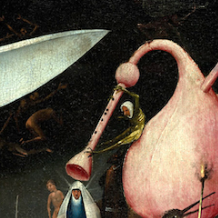
Wrath, the next Cardinal Sin, is what we might understand as uncontrolled rage. In Latin, it was called 'Ira', from which we derive the English word ire. In the medieval world, Wrath was associated with the Devil. But like the other Cardinal Sins, Wrath is a highly complex issue. Defensive anger is a fundamental instinct in all animal forms of life, and it can be entirely healthy and appropriate, whereas uncontrolled Wrath is irredeemably destructive.
The creative face of Wrath might be called Courage, because whenever we seek to change things, inner or outer, we must display an initiative that requires bravery and honesty in equal measures.
The threat of chaos
You depend on structure, tradition, and the test of time to determine the value of objects,
relationships, and ideas. The disciplined Wrath that belongs to institutions such as the military
may be acceptable because there is a respect for order. But undisciplined rage can be deeply
threatening. You tend to suppress this face of Wrath, deny its existence within yourself, and find
little understanding when you encounter it in others. But if you stifle your anger too forcibly,
And the winner is ...
Wrath is never very far below the surface, although you may not always wish to own it. It isn't
that you go around seething all the time; but you tend to dominate your environment, however
subtly, and you aren't the most accommodating of people, even if you have learned the gift of
diplomacy along the way. You have plenty of courage and initiative, and you are willing to take
risks if the achievement of your goals requires it. Life will help you to acquire some patience,
and repeated conflicts with others will hopefully teach you that your own point of view is not
always
The Fourth Sin: Pride
In the fourth chapter, Liz Greene explores the sin of Pride and how you can learn to experience inner self-love. In the full version, this chapter contains ten topics.
The Fifth Sin: Lust
In the fifth chapter, you can find out how the sin of Lust can be turned into a profound inner sense of beauty and joy.
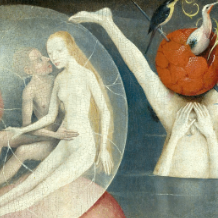
The Fifth Cardinal Sin is Lust. This sin was called 'Luxuria' in the medieval Christian world, and it was related to sexual desire and what was known as voluptuousness: unbridled sensuality. Times have changed since then, and Lust is hardly viewed as a sin these days in Western cultures.
In older texts, Lust was also called 'Inappropriate Longing', revealing another, subtler, yet extremely important dimension of Lust: desiring that which one has no right to desire. And if we can begin to understand what constitutes 'inappropriate longing' for each individual, Lust might turn out to be an immensely creative force; for what we cannot possess in the outer world, we can nourish in the inner, and discover in the process a profound experience of joy.
Recreating the past
You value structure and tradition, but you are realistic enough to accept the reality of physical
Lust and find ways of accommodating it in your life without too much disruption to your personal
world. But there are many forms of Lust, and yours may be an 'inappropriate longing' for values
that have passed their sell-by date but which you cling to because they give you a sense of safety
and personal authority. Insisting on a hierarchy of rules that deny others - especially
[..] But the nature of life and human beings makes
this an 'inappropriate longing' simply because it isn't achievable, except in an intermittent and
unpredictable way. Your intolerance for ugliness, coarseness, and physical and emotional violence
impels you to do everything in your power to calm people down, make peace between warring
factions, and maintain equilibrium, even if it means suppressing your feelings and presenting a
veneer of pleasantness that denies the truth of your own nature. Your ideal of a world full of
harmony and decency allows you to infuse your encounters with a spirit of fairness
The Sixth Sin: Deceit
The sixth chapter deals with the sin of Deceit and the way you can develop a worldly wisdom that allows an ethical adaptation to life. In the full version, this chapter contains nine topics.
The Seventh Sin: Sloth
Chapter seven is concerned with transmuting apathy and depression into serenity and acceptance of life's cyclical nature. In the full version, this chapter contains ten topics.
Conclusion
The Seven Sins have always been a powerful metaphor for the ways in which humans 'go wrong' in life. The Sins began as a story of the planetary journey of the soul into incarnation, but they were appropriated and given a particular moral slant by religious authorities, and have remained deep in human consciousness as impulses that, even in this apparently liberal twenty-first century, still have the power to make us feel bad about ourselves.
In an era when deeper questions about the meaning and nature of life have been given definitive answers by science, sociology, and politics, it might be important to remember that the word 'sin', albeit abused by so many religious doctrines, means 'injury' or 'transgression': an injury against the unfolding patterns of life itself. Yet the Seven Sins are also very much more. Each of them conceals an immensely creative human impulse. If we are prepared to understand their roots rather than simply indulging in an orgy of guilty self-loathing, they could help us to fulfil the highest potentials of which we are capable.
Appendix
These small samples from different chapters convey a glimpse of your personal horoscope The Seven Sins.
Order the complete horoscope in the Astro Shop.
ORDER IT
E-Horoscope (online delivery)
Receive immediately as PDF file, read directly on screen, print out at home.
Download access: 6 months from date of purchase
Price: EUR 61.90
E-Horoscope6-Month Access Limit
Printed and bound by hand, delivery by postal mail. With additional shipping costs, depending on the country of delivery.
Price: EUR 67.90
Printed HoroscopePlease note: Printed horoscopes can only be sent to the countries of the European Union, Switzerland and Great Britain.
Title: The Seven Sins
Author: Liz Greene
Volume: 40 - 50 pages
Available languages: English and German
Included: Ad-Free Website for 12 months (read more...)