
Free Try-Out Edition
The Seven Sins
for Ml M, born on 27 September 1946

Introduction
This is a short extract from Liz Greene's "The Seven Sins". The complete report of 40-50 pages can be ordered as an E-Horoscope or a bound booklet in the Astroshop. This horoscope analysis - using the insights of astrology and psychology combined with the tools of advanced computer technology - offers you an astrological portrait which is uniquely and individually focussed and which aims at providing greater self-knowledge.
Is the twenty-first century really a time when we can talk about sin? Is sin necessarily something that reflects a religious world-view, or might it be a fundamental psychological dynamic that has profound meaning in terms of our compulsions, our struggles with our own tendencies toward destructiveness, and our efforts to contribute something creative to life?
The concept of the Seven Cardinal Sins is a very ancient one, and long predates what we now think of in Western cultures as a medieval and grossly outdated list of offences against the dictates of religious orthodoxy. If we are to understand within a psychological framework what it might mean to sin, and what kind of profoundly complex and potentially transformative themes underpin older and often highly misleading interpretations, we will need to look more deeply at each of the Cardinal Sins and its expressions in individual character and life.
The challenges of the Seven Sins don’t disappear with age, nor lessen with experience. What can change at any time in life, with effort and inner exploration, is our consciousness, and our capacity to recognise the subtle ways in which our inner compulsions can impel us to express the very best as well as the very worst within us.
The First Sin: Envy
The first chapter is about envy and the associated struggles. Liz Greene shows how you can find an inner authenticity that provides deep self-esteem throughout life.

The first Cardinal Sin is Envy. In Latin they called it 'Invidia'. Envy is not as simple as just wishing you had something someone else has, or wishing for qualities you see in another person but feel that you yourself lack.
Envy has to do with your capacity to accept certain limitations on the ways in which you build the foundations of your self-confidence; if you can work with those limitations rather than ignoring them, then Envy can provide the bricks and mortar that help you to feel you have firm ground to stand on throughout life.
Learning to live in the moment
Dealing with Envy in a creative way requires calm realism and an acceptance of the world of human
failings, imperfections, and fears. And that does not come easily to you. Your dreams of life take
you beyond ordinary limits and the pressures, responsibilities, and routines of everyday tasks,
and your aspirations are likely to be focused on the future and on the fruits of your creative
imagination rather than on living each moment with an appreciation of ordinary
The pitfalls of cynicism
You don't have many illusions about human nature, and Envy is probably something that you can
accept as part of the usual catalogue of human failings. This rather cynical view of life gives
you considerable strength and resilience. But you may find yourself envying those who have more
trust in life and in others than you do, and this quality of simple faith and optimism may stir
some very uncomfortable feelings in you because your cynicism can often be a mask to hide
The Second Sin: Gluttony
The second chapter is about gluttony and how to discover a powerful inner aspiration that opens new dimensions of awareness. In the full version, this chapter contains ten topics.
The Third Sin: Wrath
In the third chapter, Liz Greene shows how you can transform rage and resentment into courage and self-affirmation. In the full version, this chapter contains nine topics.
The Fourth Sin: Pride
In the fourth chapter, Liz Greene explores the sin of Pride and how you can learn to experience inner self-love. In the full version, this chapter contains eight topics.
The Fifth Sin: Lust
In the fifth chapter, you can find out how the sin of Lust can be turned into a profound inner sense of beauty and joy.
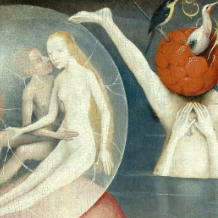
The Fifth Cardinal Sin is Lust. This sin was called 'Luxuria' in the medieval Christian world, and it was related to sexual desire and what was known as voluptuousness: unbridled sensuality. Times have changed since then, and Lust is hardly viewed as a sin these days in Western cultures.
In older texts, Lust was also called 'Inappropriate Longing', revealing another, subtler, yet extremely important dimension of Lust: desiring that which one has no right to desire. And if we can begin to understand what constitutes 'inappropriate longing' for each individual, Lust might turn out to be an immensely creative force; for what we cannot possess in the outer world, we can nourish in the inner, and discover in the process a profound experience of joy.
The uses of enchantment
You are not a trusting person, and your suspicion of the longings that Lust can generate is often
justified. Your hard-won realism about the fruitlessness of pursuing impossible dreams is a
positive quality that contributes strength and worldly wisdom to your life. But it can also lock
the doors to inner realities that you need to experience in order to develop a sense of inner
connectedness and greater trust in life. Lust on the purely sensual level may not make you feel
[..] Deep down, your Lust is a mystical longing, even if
sensual gratification is the surface level of its object. You are in love with the sacrificial act
of desiring what you cannot have or openly possess because of the way in which it transforms you,
and an ideal of self-abnegation colours the ways in which you experience desire. Illicit love,
love that can't be fulfilled openly, or love for someone unobtainable, may provide you with
avenues to pursue your quest for dissolving into a greater unity. Your longing must remain
unsatisfied as long as you exist in a mortal body, because it offers a bridge
The Sixth Sin: Deceit
The sixth chapter deals with the sin of Deceit and the way you can develop a worldly wisdom that allows an ethical adaptation to life.

Deceit, the Sixth of the Cardinal Sins, was known as 'Avaritia' in Latin. The term Deceit, usually referred to as Avarice in medieval descriptions of the Sins, is based on a much older text that calls it 'the machinations of evil cunning'.
The sin of Deceit is neither simple lying nor simple greed. It is the urge to use trickery, and can accompany a sense of superiority because successful perpetrators of Deceit believe that they are cleverer than other people and therefore entitled to dupe them. Yet the acute intelligence, perspicacity, subtlety, and depth that successful Deceit requires could also, if combined with integrity and compassion, generate something we might call Worldly Wisdom.
[..] Your
aesthetic sensibility and clarity of thought can be valuable assets in any creative work. But
Deceit comes as part of the package of being civilised. If you are intent on achieving cooperation
in relationships or group situations at the expense of your own feelings, or as a way of subtly
selling an idea, you will inevitably wind up deceiving others, and even yourself, about your real
feelings and motives. Wishing everyone a nice day to keep them quiet won't help your self-respect.
As Abraham Lincoln once said, you cannot please all of the people all of the time. Learn to
distinguish between
The social network
You are most at home when you are exchanging ideas with friends and like-minded colleagues, and
you love the feeling that you can bring a plan together through cooperation and team effort. You
need a broad public platform from which to express your aspirations, and you enjoy feeling that
you have your finger on the pulse of current trends rather than being buried in a narrow,
pedestrian world that allows you little contact with far-ranging new visions. Your gift at tuning
in
The Seventh Sin: Sloth
Chapter seven is concerned with transmuting apathy and depression into serenity and acceptance of life's cyclical nature. In the full version, this chapter contains ten topics.
Conclusion
The Seven Sins have always been a powerful metaphor for the ways in which humans 'go wrong' in life. The Sins began as a story of the planetary journey of the soul into incarnation, but they were appropriated and given a particular moral slant by religious authorities, and have remained deep in human consciousness as impulses that, even in this apparently liberal twenty-first century, still have the power to make us feel bad about ourselves.
In an era when deeper questions about the meaning and nature of life have been given definitive answers by science, sociology, and politics, it might be important to remember that the word 'sin', albeit abused by so many religious doctrines, means 'injury' or 'transgression': an injury against the unfolding patterns of life itself. Yet the Seven Sins are also very much more. Each of them conceals an immensely creative human impulse. If we are prepared to understand their roots rather than simply indulging in an orgy of guilty self-loathing, they could help us to fulfil the highest potentials of which we are capable.
Appendix
These small samples from different chapters convey a glimpse of your personal horoscope The Seven Sins which comprises 40-50 pages. It can be ordered as an E-Horoscope or bound booklet in the Astroshop.
Please read a complete sample report (of a different person) to get an overview of the complete horoscope.
You may wish to take a look at the large selection of other reports.
ORDER IT
E-Horoscope (online delivery)
Receive immediately as PDF file, read directly on screen, print out at home.
Download access: 6 months from date of purchase
Price: EUR 61.90
E-Horoscope6-Month Access Limit
Printed and bound by hand, delivery by postal mail. With additional shipping costs, depending on the country of delivery.
Price: EUR 67.90
Printed HoroscopePlease note: Printed horoscopes can only be sent to the countries of the European Union, Switzerland and Great Britain.
Title: The Seven Sins
Author: Liz Greene
Volume: 40 - 50 pages
Available languages: English and German
Included: Ad-Free Website for 12 months (read more...)